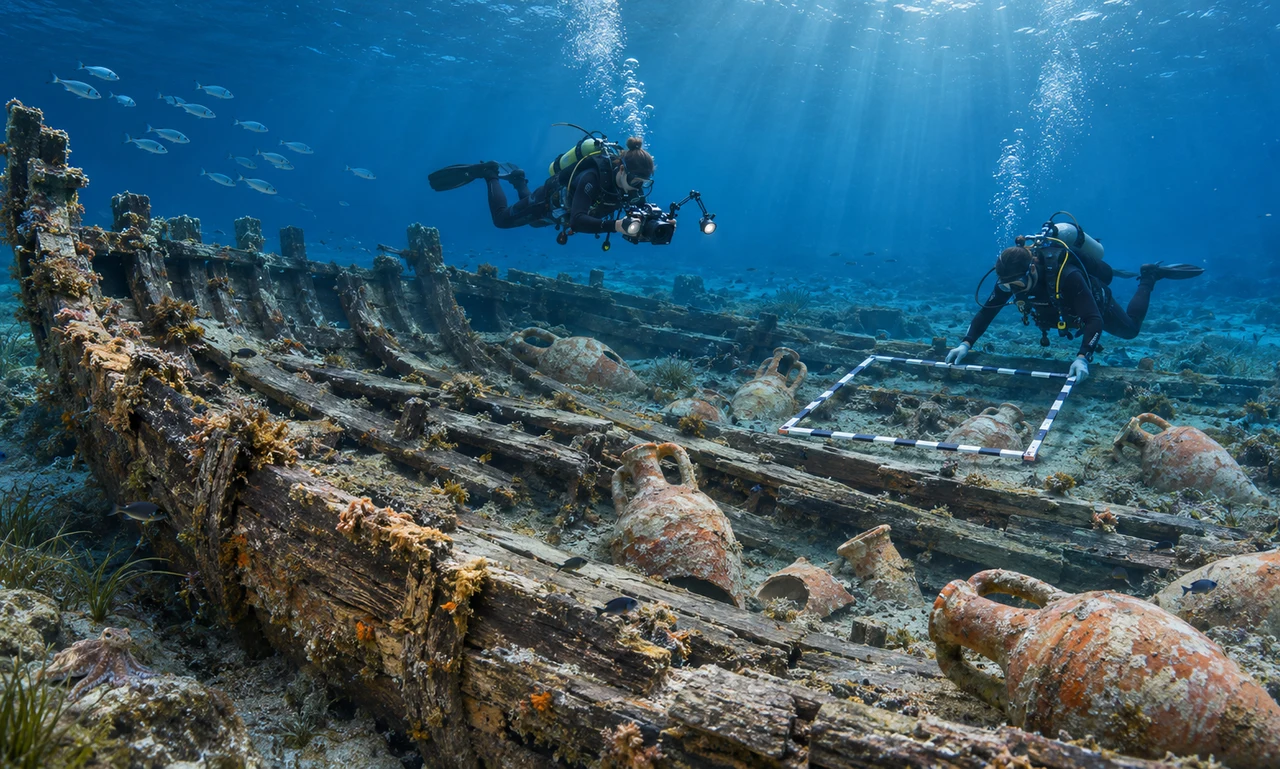
For centuries, a shipwreck could be seen primarily as a store of valuables waiting to be recovered. The UNESCO Convention on the Protection of the Underwater Cultural Heritage helped establish a different principle: submerged traces of human life are a shared cultural record whose context matters as much as any individual object.
Marking the convention’s 25th anniversary, UNESCO gathered states, researchers and heritage institutions to review its achievements and consider how protection should evolve alongside ocean policy.
History is more than cargo
The 2001 convention covers traces of human existence with cultural, historical or archaeological character that have been underwater for at least 100 years. That can include shipwrecks, settlements, aircraft, ports, human remains and the landscapes around them.
When objects are removed without careful recording, their relationship to the site is lost. Archaeologists learn from how cargo was arranged, where a vessel broke apart, the layers of sediment and the ordinary belongings of people aboard. Responsible work therefore emphasizes research, documentation, preservation and cooperation rather than commercial recovery.
New pressures are reaching old sites
Submerged heritage faces looting and illicit trafficking, but also coastal erosion, changing seas, commercial exploitation and poorly managed tourism. These pressures connect cultural protection with marine spatial planning, climate adaptation and the management of coastal communities.
UNESCO’s anniversary symposium explored how underwater heritage can become part of wider ocean governance instead of being treated as a separate specialist concern. That integration can help authorities consider archaeological sites when planning infrastructure, protected areas, tourism and responses to coastal change.
An accompanying exhibition in Paris, “Stories from the Deep,” presents archaeological objects recovered by Italian authorities and highlights the role of international cooperation in opposing illicit trade. The year also brought the first International Day for Underwater Cultural Heritage, observed on August 21.
The anniversary is a reminder that what lies beneath the sea is not outside society. It records migration, trade, conflict, technology and daily life across generations. Protecting that evidence preserves not only beautiful artefacts, but the relationships and stories that make them meaningful.