Two culturally significant Samoan treasures have returned from Melbourne for a temporary stay in Samoa, creating an opportunity for people to encounter objects whose meaning extends beyond the information held in a museum record.
The ‘Ie Sina and ‘Ie Fuipani are on loan from Museums Victoria for the Sāmoa Mo Sāmoa exhibition. Their return supported a three-day workshop and seminar organized by the Museum of Samoa and cultural partners with UNESCO support.
An object carries knowledge that a label cannot hold
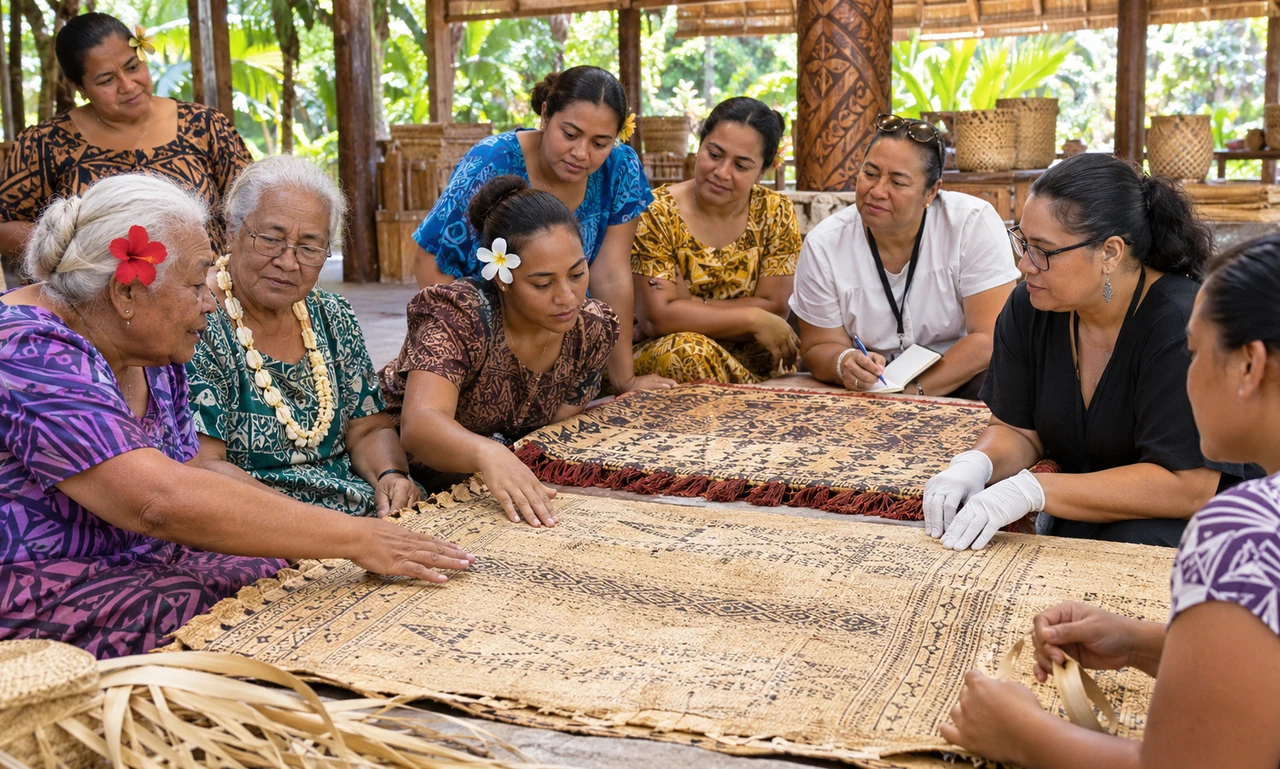
Cultural practitioners, weavers, women’s representatives, elders, young people, researchers and museum professionals gathered to share what they knew about the textiles. The collection’s recorded history reaches back to 1878, but available documentation is limited.
Institutional records can describe when an object entered a collection and how it has been stored. Communities may hold different forms of evidence: memories, names, techniques, relationships and knowledge of when or why an object has meaning.
The workshop brought those sources together. Specialists contributed experience in textile conservation, documentation and collections management, while Samoan participants helped deepen the interpretation of the treasures and their place in cultural identity.
A temporary loan can build a lasting relationship
The ‘Ie Sina reflects skills, values and creativity transmitted through generations of Samoan women and communities. Its significance therefore lives not only in the material itself, but in the people able to recognize, make and explain it.
Temporary returns do not resolve every debate about collections held overseas. They can create direct access, reveal gaps in museum knowledge and establish relationships that influence future care, research and display.
The programme also strengthens the Museum of Samoa’s professional capacity while giving younger generations a chance to connect with heritage through people who practise it. That exchange turns an exhibition from a viewing experience into a process of shared documentation.
Safeguarding heritage is often described as preserving the past. In this case, preservation also means allowing knowledge to move again — between museums and communities, between elders and young people, and between an object’s recorded history and the living culture that gives it meaning.