A school building may survive an earthquake while learning still stops for weeks. Another may have emergency plans but structural weaknesses that no drill can solve. A UNESCO-supported programme in Türkiye is treating resilience as the connection between infrastructure, institutions and the people who use schools every day.
Partners in the Resilient Infrastructure and Safe Education in Türkiye project met to review progress and plan the next phase. The initiative is supported through Japanese Funds-in-Trust and works with Türkiye’s Ministry of National Education.
Safety begins with evidence from the building
The programme includes rapid assessments of school safety and infrastructure readiness in earthquake-affected areas. It also examines energy efficiency, because ventilation, heating, power and operating costs shape whether a school remains usable and sustainable.
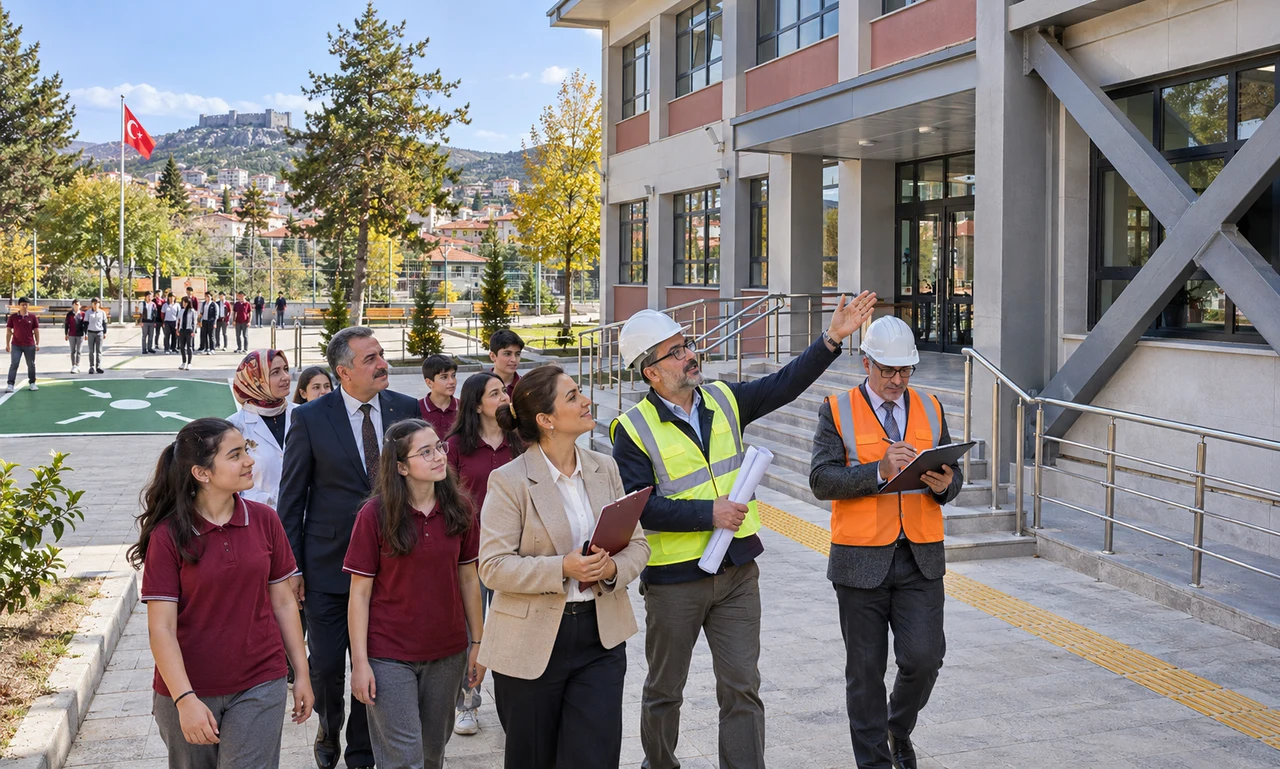
On November 6, project partners visited three schools in Kütahya. Meeting teachers and school communities gave technical teams a direct view of local conditions, priorities and practical constraints that may not appear in central records.
Schools also serve wider roles during emergencies. They may become assembly points, information centres or temporary community spaces. Their plans must therefore connect with municipal services, emergency agencies and the surrounding neighbourhood.
Preparedness lives in routines as well as plans
RISE Türkiye aims to strengthen school emergency teams and drills and review where disaster risk reduction can fit into the national curriculum. Students and teachers need clear actions that can be practised before a crisis rather than discovered during one.
The partnership brings together government, universities, the Japanese embassy and cooperation agency, UNICEF Türkiye, the Turkish National Commission for UNESCO and other technical organizations. No single participant holds all the engineering, education, emergency and community knowledge required.
The challenge is to turn project findings into lasting systems. Assessments must inform budgets and repairs. Training must reach new staff. Drills need review, and lessons from individual schools must influence wider policy.
Resilience is sometimes represented by a reinforced wall. The more complete picture includes the engineer who checks it, the teacher who knows the evacuation route, the student who understands the drill and the public institution that keeps those arrangements current over time.