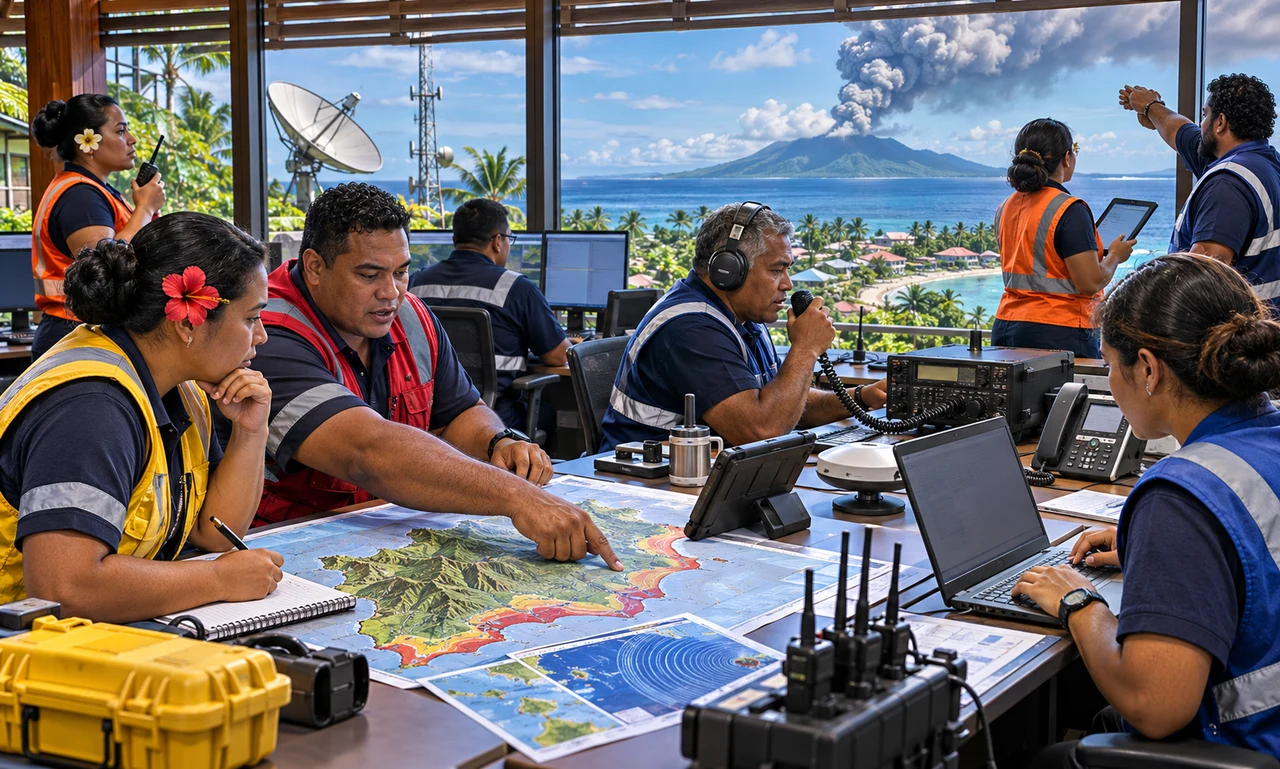
A tsunami warning system is tested most honestly when the scenario is difficult. Pacific Wave 2026 asked countries to respond to two overlapping volcanic events, one at Home Reef in Tonga and another at Kuwae in Vanuatu, with little time to decide what coastal communities needed to know.
The regional exercise was held on November 5. UNESCO’s Intergovernmental Oceanographic Commission coordinated the drill to examine how warning centres and national agencies exchange information when a volcanic crisis creates tsunami risk.
Communication must survive disruption
Participants used WhatsApp, high-frequency radio and other channels. The exercise showed why an emergency platform needs more than a group account: users must be verified, responsibilities understood and message formats clear enough to prevent delay or confusion.
Backup systems matter because the same eruption, earthquake or severe weather that creates danger can also damage power and communications. A warning centre may produce an accurate assessment, but the public gains nothing if the message stops at a failed connection or reaches an official who cannot confirm its origin.
The drill also tested coordination between scientific agencies, emergency managers and national focal points. Each group works with a different part of the problem. Scientists interpret observations, warning centres evaluate possible waves, and local authorities decide how to alert or move people.
A rehearsal exposes the quiet failures
Exercises are valuable because they reveal weaknesses without waiting for a real disaster. An outdated contact list, an unmonitored account or an ambiguous message heading can be corrected before lives depend on it.
Participants reviewed the results during a November 18 debrief. The lessons will inform preparedness work in 2027 and the next region-wide Pacific Wave exercise in 2028.
No drill can reproduce the fear and physical damage of an actual tsunami. It can make roles more familiar and communication more dependable. When minutes are all that remain, resilience is often the result of ordinary systems tested repeatedly before the extraordinary day arrives.