A student competition is turning one of lunar exploration’s hardest engineering questions into a creative classroom exercise: how should people power a base in places where sunlight may disappear for long periods — or never arrive at all?
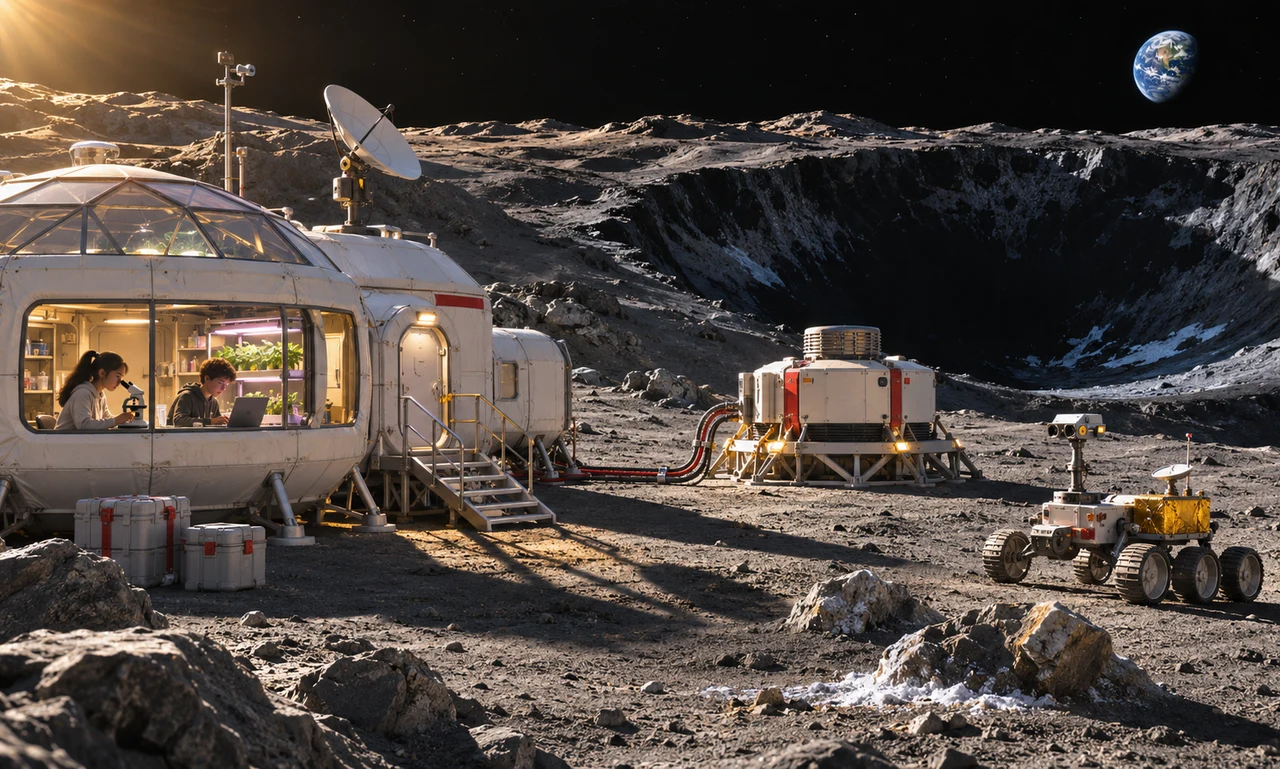
NASA’s 2026–27 Power to Explore Student Challenge invites kindergarten through grade 12 students in the United States to design and illustrate a nuclear-powered lunar base. Each entry combines an original illustration with a 200-word essay describing a personal “superpower” the student would bring to the mission.
Why the Moon needs more than solar panels
Many scientifically valuable areas near the lunar south pole face extreme cold and difficult lighting. Some craters remain in permanent shadow, while most of the Moon experiences nights lasting about two Earth weeks. Instruments, communication equipment, rovers and living spaces still require dependable energy.
Radioisotope power systems produce heat from the natural decay of radioactive material and can convert some of that heat into electricity. Fission systems use a controlled nuclear reaction to generate a larger supply. The contest asks students to consider how both approaches could support human and robotic exploration.
Creativity anchored in constraints
The challenge is not simply to draw an impressive settlement. Students must show how power makes specific activities possible: keeping instruments warm, carrying science equipment across long distances, supporting life and reaching places that sunlight cannot serve.
Entries are divided into three grade groups: kindergarten to grade 4, grades 5–8 and grades 9–12. One winner from each category will receive a trip for two to NASA’s Glenn Research Center in Cleveland. Every participant receives a digital certificate and an invitation to a virtual event with agency experts. Submissions close March 1, 2027.
The educational value lies in bringing imagination and systems thinking together. A Moon base is not one machine but a network of shelter, mobility, communication, heat and power. Asking students to explain the energy behind their vision makes the invisible infrastructure part of the story — and shows that exploration depends as much on dependable systems as it does on daring destinations.