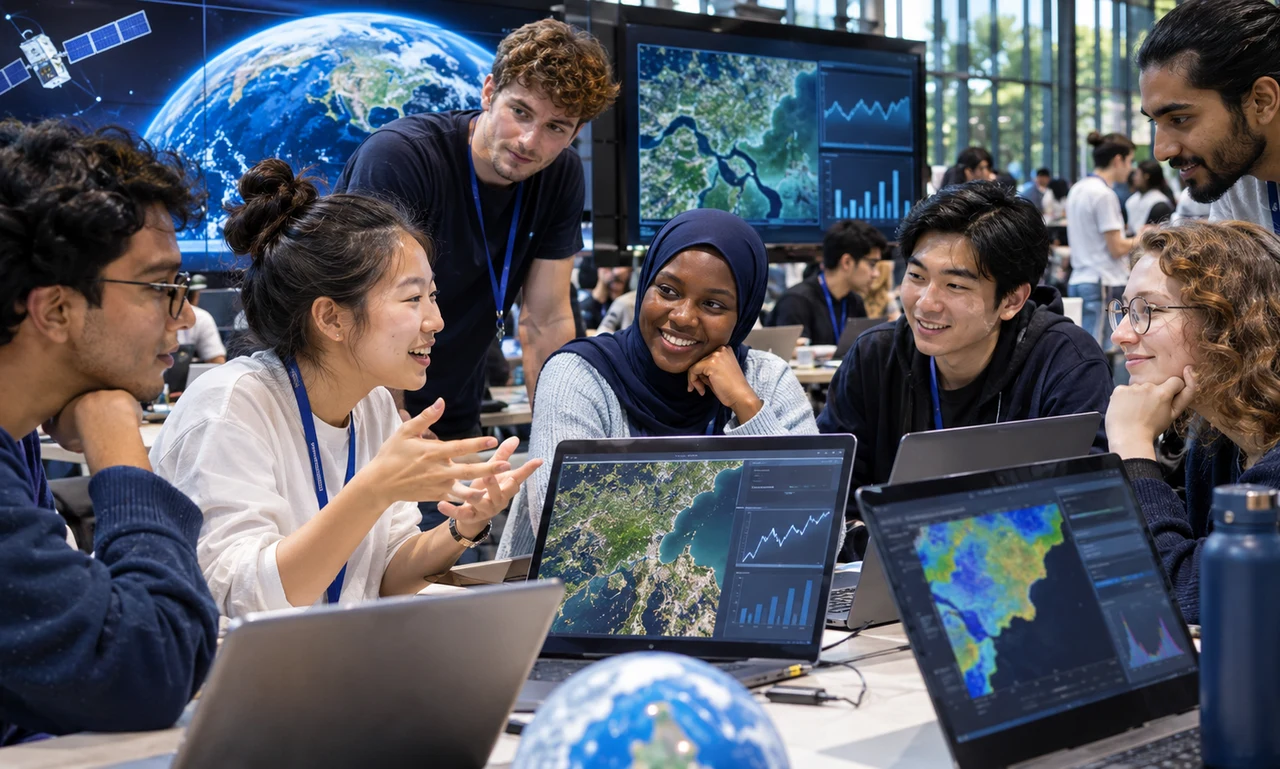
NASA’s 2026 International Space Apps Challenge registered 181,835 participants across 593 events, setting a new participation record for the annual global hackathon. The event took place on November 14 and 15 and invited teams to build projects using open scientific data.
Participants selected from 14 challenges connected to Earth science or space exploration. Local events were organized by volunteers, while teams worked within the same two-day period to develop and submit their ideas.
Open data becomes working material
The challenge is designed around datasets that are already available to researchers and the public. A hackathon gives participants a reason to move beyond browsing those resources and turn them into visualizations, services, educational tools or new ways of asking questions.
Teams can combine different skills. A useful project may need software development, visual design, scientific understanding, storytelling and knowledge of the people who might use the result. That structure allows students and first-time participants to contribute alongside experienced technologists.
A network of local events
NASA reported that registrations increased by 59 percent from the previous year, marking a fifth consecutive year of growth. Since the programme began in 2012, more than 600,000 people from over 190 countries have taken part.
The scale is global, but much of the experience happens locally. Volunteer-led gatherings give teams a place to meet, share expertise and adapt a broad challenge to a particular context. That can be especially valuable when Earth-observation data is applied to questions involving local environments, hazards or public services.
Submitted projects will now move through judging, with 10 global winners expected to be announced in January. The record does not measure the long-term impact of every prototype, but it does show a growing appetite for hands-on participation in open science.