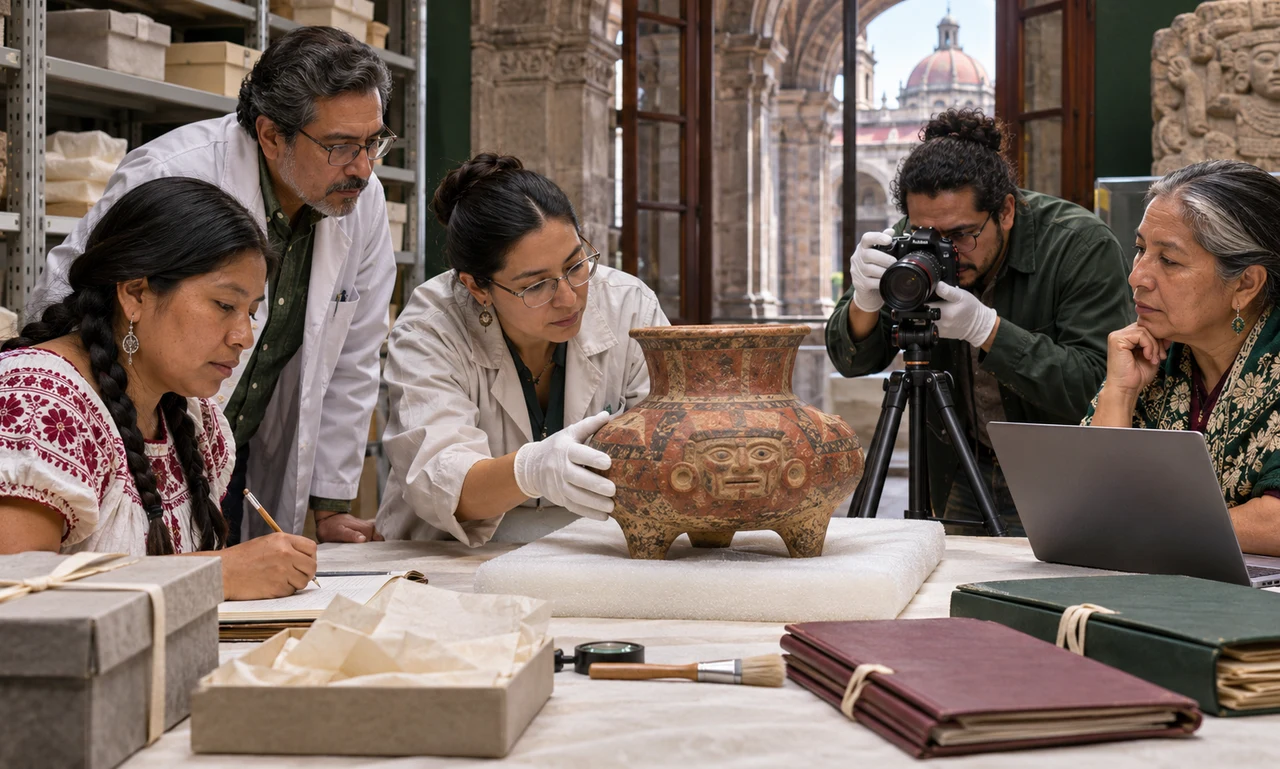
Mexico is developing a national protocol to make the repatriation and recovery of cultural property more consistent. The work brings together the National Institute of Anthropology and History, the Ministry of Foreign Affairs and UNESCO around a process that can be used across different cases and regions.
The second drafting workshop was held at the National Museum of History in Chapultepec Castle. Specialists joined from several northern states, including Baja California, Sonora, Chihuahua, Coahuila, Nuevo León and Tamaulipas, where cross-border movement makes coordination especially important.
What happens after an object is found?
A return can involve museums, customs authorities, diplomats, law enforcement, communities and courts in more than one country. Each needs reliable evidence about an object’s origin, ownership, movement and cultural status. A poorly documented handover can create new uncertainty even when the intention is right.
The draft protocol addresses the legal framework, strategies for action, a general course of procedure, a public registry of cultural property, follow-up, safekeeping and final destination. Organizers describe it as a living document that can be updated as international rules and practical challenges change.
Repatriation is also a cultural right
Recovered heritage does not always belong most meaningfully in a national storage room. Indigenous and Afro-Mexican communities preserve history through local museums, churches and living cultural practices. A credible process must therefore consider who has the closest relationship to an object and how its return can support recognition, conservation and access.
The protocol also strengthens Mexico’s wider response to illicit trafficking. Clear responsibilities can help authorities move faster when a piece appears in an auction, private collection, border seizure or foreign institution. Shared standards make it easier to preserve the chain of evidence and coordinate international requests.
No procedure can settle every disputed history. Provenance may be incomplete, laws differ and communities can hold competing views about custody. The value of a protocol is that it makes those decisions more transparent. It turns repatriation from an improvised negotiation into a public responsibility with defined steps, documented evidence and a destination chosen for more than convenience.