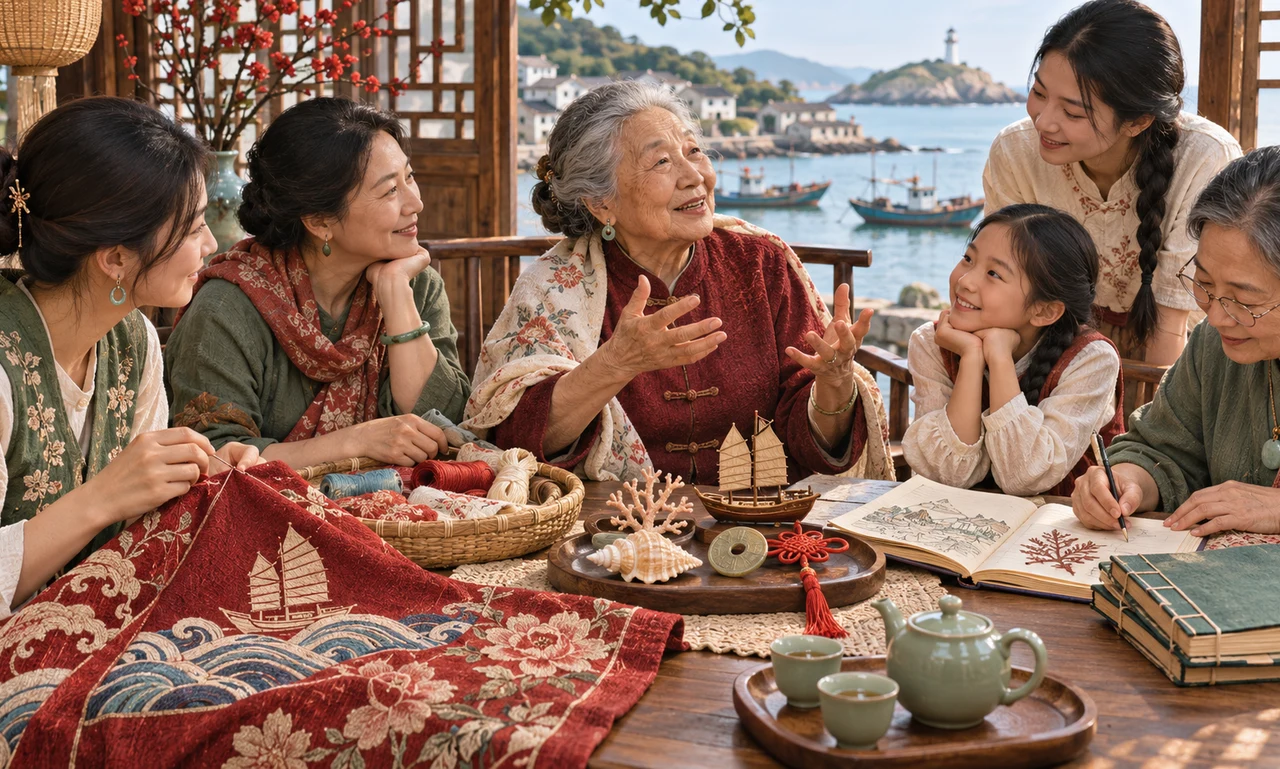
A forum in Putian, China, brought together more than 100 participants from 13 countries to discuss how women safeguard cultural heritage and how media can widen their participation in public life. UNESCO published details of the October 31 gathering on November 16.
The event combined the 2026 Mazu Culture Women’s Exchange Forum with the 14th Forum of the UNESCO Chair in Media and Gender. Researchers and practitioners considered the transmission of Mazu culture, international cultural exchange and the opportunities created by digital communication.
Heritage is sustained through participation
The discussions framed women not simply as subjects of cultural policy, but as decision-makers, teachers, storytellers and organizers. UNESCO representatives emphasized that safeguarding traditions depends on who has a voice in determining how they are recorded, explained and shared.
Mazu culture has grown from traditions associated with a Chinese sea goddess into a wide network of practices and community connections. The forum used that setting to consider a broader question faced by many living traditions: how can a community pass knowledge between generations while allowing its meaning and methods to respond to contemporary life?
Digital projects receive recognition
Organizers also announced results from a call for examples of women’s digital empowerment. The initiative received 324 submissions from China and other countries. Fifty cases were recognized as outstanding and another 100 were shortlisted after several rounds of review.
The forum linked digital participation with heritage rather than presenting them as separate subjects. Recording a story, teaching a craft online or connecting dispersed communities can extend access, but technology alone does not decide whose perspective receives attention. Training, representation and decision-making remain part of the work.
The UNESCO Chair in Media and Gender was established at the Communication University of China in 2005, with a joint chair later established at China Women’s University. Its work combines research, education and international exchange focused on media and gender equality.