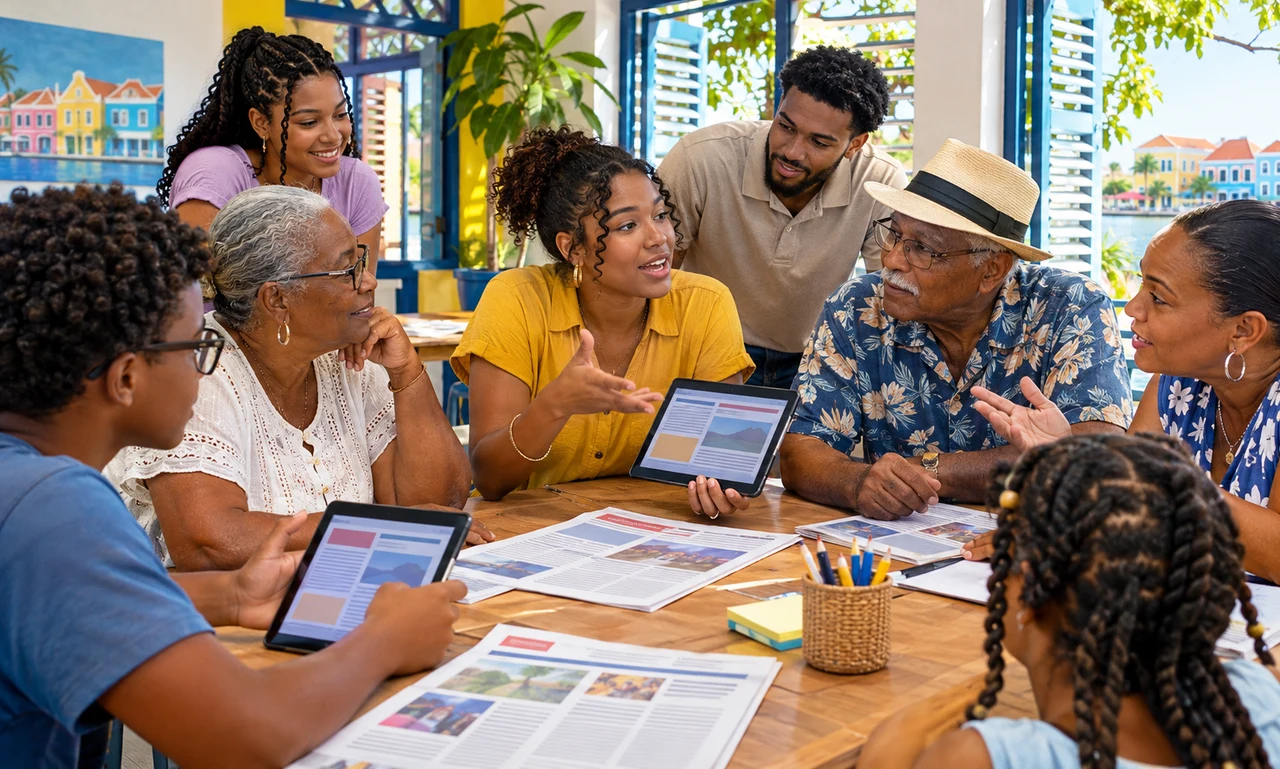
A workshop in Curaçao has framed media and information literacy as a lifelong civic skill rather than a lesson reserved for students. The two-day gathering brought 35 participants from government, business, universities and civil society into the same conversation about navigating modern information systems.
UNESCO’s Caribbean office organized the event with the Curaçao National Commission and the country’s Regulatory Authority. Its wide agenda reflected how deeply communication now shapes ordinary choices.
One skill touches many parts of life
Sessions connected media judgement with cybersecurity, financial literacy, digital inclusion, mental health, intellectual-property rights, gender and peacebuilding online. These subjects can appear separate, but each asks people to evaluate sources, understand incentives and recognize how a message may influence behaviour.
A convincing false claim can lead to a financial loss. Harassment can drive someone out of a public discussion. Weak privacy habits can expose personal data. Copyright confusion can discourage creation or enable misuse. Treating these only as technical problems misses the common need for careful, informed participation.
Learning cannot stop at the school gate
Schools remain important, but the workshop emphasized parents, older people, professionals, public servants and community organizations as well. Platforms and information habits change too quickly for one course early in life to be enough. People need opportunities to refresh their skills and discuss new risks in settings they trust.
Cross-sector participation also helps turn broad principles into local practice. Regulators understand the communications environment, educators know how people learn, community groups see where access is uneven, and journalists and researchers can explain how evidence is produced and checked.
A workshop alone does not create a national culture of thoughtful media use. Its value is as a starting point for shared language and partnerships. Curaçao’s approach suggests that resilience is strongest when it is distributed: not a small group policing information for everyone else, but a public equipped to ask who made a claim, what evidence supports it, whose interests it serves and what may be missing.