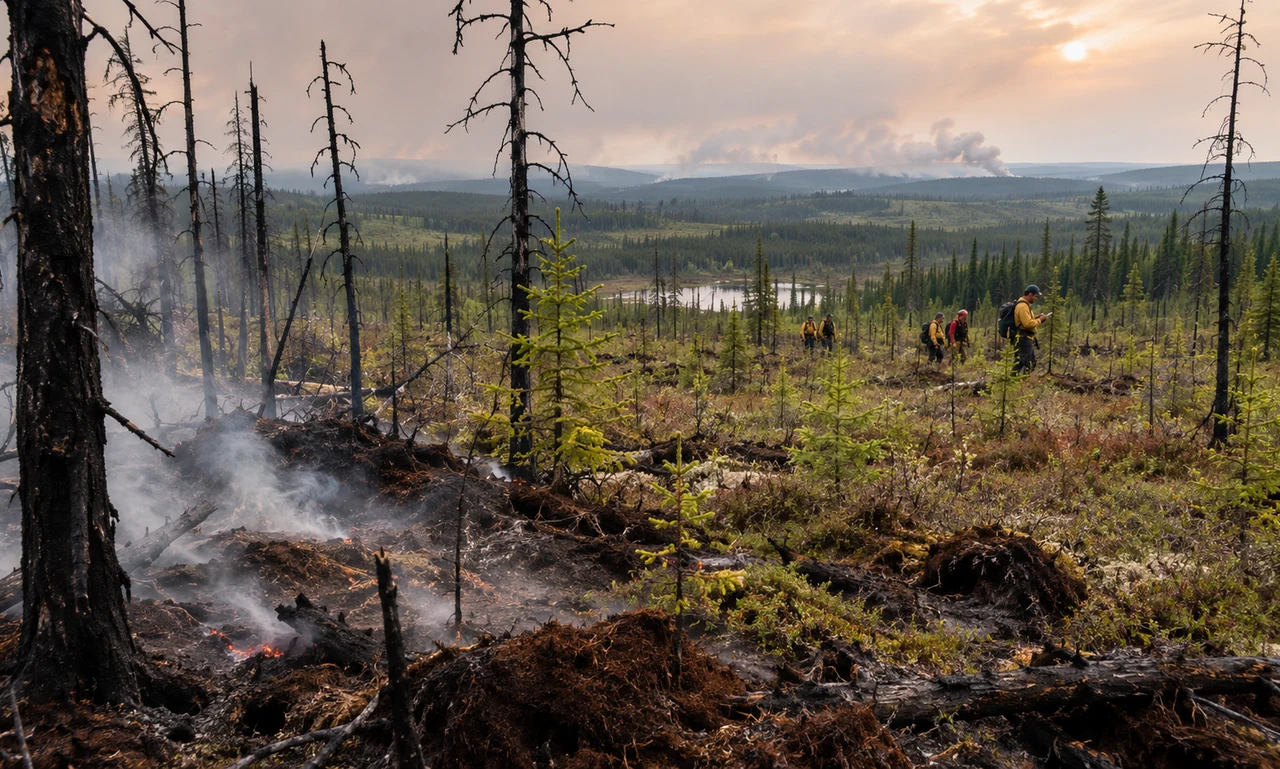
Northern forests may carry the consequences of temporarily exceeding 1.5°C of global warming for decades or centuries, even if temperatures later fall. A new scientific assessment warns that increasingly severe wildfires could push some boreal landscapes beyond their ability to regenerate.
The report was led by Natural Resources Canada, with contributions from the International Institute for Applied Systems Analysis and support from the United Nations Environment Programme. It examines circumboreal forests across the high northern latitudes, one of Earth’s largest stores of land-based carbon.
Fire can change the system that follows
Models indicate that the area burned across boreal forests could double by the end of the century, with still larger increases possible during climate overshoot. A single fire is part of many northern ecosystems, but repeated or unusually intense burns can remove seed sources, damage soils and favor a different mix of vegetation.
The carbon risk extends below the trees. Northern forests hold roughly one-third of the world’s terrestrial forest carbon, much of it stored in peat, soil and permafrost. During Canada’s record 2023 fire season, the assessment estimates that fires released 554 million tonnes of carbon, with 76 per cent coming from soils and peat.
Returning below a threshold does not reset the forest
Climate overshoot describes a period when warming rises above a target before later being reduced. The report’s central warning is that ecosystems do not necessarily follow temperature back to their previous state. Lost peat, altered drainage, thawing ground and repeated failure of trees to regenerate can persist across generations.
The effects also travel. Smoke threatens health far from a fire, while northern and Indigenous communities face risks to infrastructure, livelihoods and cultural heritage.
The assessment calls for rapid emissions reductions alongside stronger prevention, early warning, preparedness, restoration and fire management informed by Indigenous and local knowledge. Those actions address different timescales: cutting emissions limits the conditions driving extreme fire, while landscape stewardship reduces immediate danger and supports recovery.
A forest can look vast and permanent from a distance. The research argues for a more careful view: resilience has limits, and crossing them may create changes that cooling alone cannot reverse.